
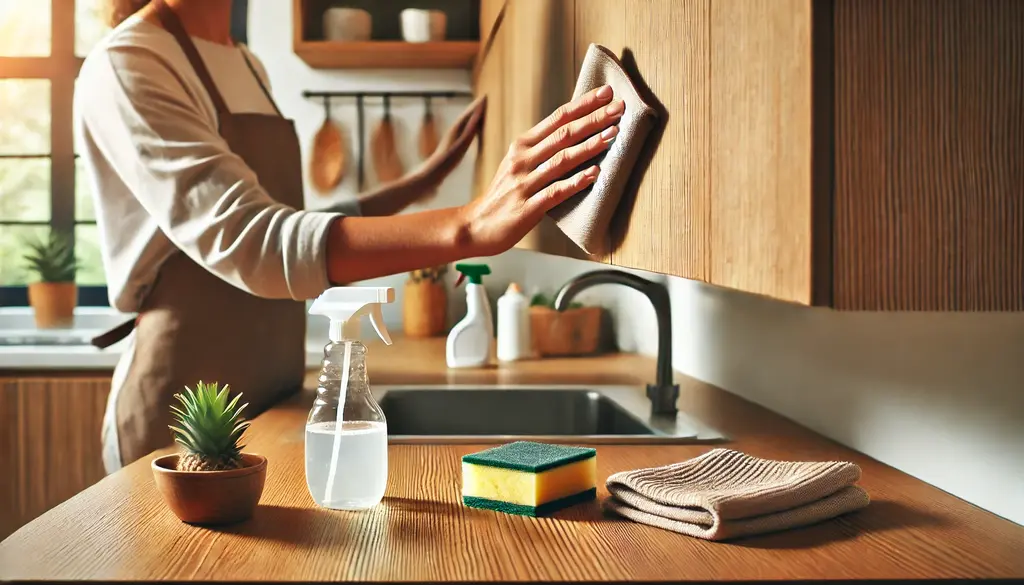
Kitchen cabinets are the workhorses of the kitchen. They hold our plates, glasses, pantry items, and cooking tools, all while enduring a daily assault from grease, spills, and fingerprints. Yet, they often go unnoticed in the weekly cleaning routine, slowly accumulating grime that’s tough to remove without the right approach. Regularly cleaning and maintaining your cabinets doesn’t just improve the look of your kitchen—it also extends the life of the cabinets themselves, keeping them in good shape for years to come.
In this guide, we’ll cover how to clean kitchen cabinets and the do’s and don’ts of cleaning kitchen cabinets, offering expert tips to help you tackle the grime effectively and safely.
Learn more: Kitchen Lighting Mistakes to Avoid for a Well-Lit Space
Tools and Materials Needed for Cleaning Kitchen Cabinets
Before you start, gather the right materials. Cleaning cabinets is much easier when you have everything you need within reach. You’ll need soft microfiber cloths, gentle dish soap, warm water, vinegar, paper towels, a toothbrush, baking soda, an all-purpose cleaner, and possibly a non-abrasive degreaser. Each of these items will play a role in keeping your cabinets spotless and damage-free.
Step-by-Step Guide to Cleaning Kitchen Cabinets
Here are the step-by-step guide to clean kitchen cabinets:
Step 1: Empty the Cabinets
The first step is straightforward—remove everything inside your cabinets. Not only does this make it easier to clean every inch, but it also allows you to reorganize items, check expiration dates, and get rid of anything you no longer need. With all items removed, you’ll have clear access to the back corners and undersides of each shelf.
Step 2: Prepare a Cleaning Solution
A simple yet effective cleaning solution can be made by mixing a few drops of mild dish soap with warm water. This combination is gentle enough for most surfaces but still effective against everyday grime. If your cabinets are particularly greasy, adding a splash of white vinegar can help cut through the buildup. Avoid harsh chemicals and strong commercial cleaners unless you’re dealing with stubborn, caked-on residue that won’t respond to gentler solutions.
Step 3: Start from the Top
When cleaning, always start from the top and work your way down. This method allows any dust or crumbs to fall to lower areas, which you’ll clean afterward. Dip your cloth into the cleaning solution, wring it out to avoid excess moisture, and gently wipe the cabinet surfaces, paying attention to edges and corners where grime tends to accumulate.
Step 4: Rinse and Dry Thoroughly
After wiping with a soapy cloth, it’s important to rinse the cabinets with a separate damp cloth to remove any remaining soap residue. Soap left behind can create a sticky surface that attracts dirt faster. Once rinsed, use a dry microfiber cloth to wipe down all surfaces, as excess moisture can damage the cabinet finish over time. Thorough drying is especially important for wood cabinets, which are vulnerable to water damage.
Step 5: Clean Glass Doors
If your kitchen cabinets have glass panels, use a glass cleaner to keep them crystal clear. Spray a small amount onto a paper towel or cloth, avoiding direct spraying on the glass, which could lead to streaks. Wipe down the glass until it’s free of smudges and fingerprints.
Step 6: Don’t Forget Knobs and Handles
Knobs and handles are often overlooked, yet they collect a lot of grime and fingerprints. Use a vinegar solution or a drop of dish soap with warm water and scrub around these areas with a toothbrush. The bristles of the toothbrush will help dislodge any dirt trapped in small crevices.
Step 7: Deal with Grease Buildup
If your cabinets are in a high-traffic cooking area, they’re likely to have a layer of grease. A paste made of baking soda and water is a great solution here. Gently rub the paste onto the greasy spots, let it sit for a few minutes, and then wipe it off with a damp cloth. For stubborn grease, a non-abrasive degreaser can help, but always test a small area first to ensure it doesn’t damage the finish.
Step 8: Clean the Inside of Cabinets and Items
Finally, give the inside of your cabinets and the items stored there a quick clean. Use a damp cloth to wipe down shelves and inspect any containers or items for residue. This is also a good opportunity to check expiration dates and discard any items that have outlived their shelf life.
Cleaning Techniques for Different Cabinet Types
Here are some clearing techniques for different cabinet types:
Painted Cabinets
Painted cabinets require a gentle touch. Over time, painted surfaces can be sensitive to abrasion, so avoid using baking soda or scrubbing too hard. Instead, stick with a mild dish soap solution. For stubborn spots, a gentle wipe with a damp cloth should suffice. Be cautious not to leave excess water on painted surfaces, as it can cause peeling or discoloration.
Wood Cabinets
Wood cabinets bring warmth and beauty to a kitchen but require a bit more care. Use a gentle oil soap designed for wood surfaces to clean them, as harsh chemicals can strip away the natural oils in the wood, making it appear dry and dull. Always wipe with the grain of the wood to avoid streaks and ensure that moisture is wiped off immediately after cleaning to prevent warping.
Laminate Cabinets
Laminate cabinets are usually easier to clean, but it’s important to avoid abrasives that can scratch the surface. A vinegar and water solution works well on laminate without damaging it. Apply the solution, wipe gently, and dry thoroughly. Laminate is durable but can be sensitive to harsh chemicals, so stick to mild solutions.
Glass Cabinets
For glass doors, use a dedicated glass cleaner. Avoid oil-based cleaners, which can leave streaks, and use paper towels or a lint-free cloth to get a streak-free shine. If there’s any build-up along the edges, a small toothbrush can help get into tight spaces without scratching the glass.
How Often Should You Clean Kitchen Cabinets?
Let’s explore when you should clean kitchen cabinets:
Weekly Maintenance
A quick weekly wipe-down goes a long way in keeping cabinets fresh. For weekly cleaning, all you need is a damp microfiber cloth with a small amount of dish soap to remove fingerprints, light dust, and smudges. Quick maintenance will reduce the need for heavy-duty scrubbing and keep grime from settling.
Yearly Deep Clean
Once or twice a year, plan a thorough cleaning session. This is when you’ll want to remove all items, clean every surface (including shelves and corners), and check for any repairs needed. A deep clean helps refresh the look of your cabinets and ensures they stay in top condition.
Do’s and Don’ts of Cleaning Kitchen Cabinets
Now let’s look into the do’s and don’ts of cleaning kitchen cabinets:
Do’s
It’s important to stick with safe cleaning practices to maintain the appearance and durability of your cabinets. Always use a mild cleaner like dish soap or vinegar that won’t strip or harm the finish. Soft microfiber cloths are ideal as they’re gentle on surfaces and won’t scratch. When cleaning intricate areas around knobs or in the corners, use a toothbrush to reach those tricky spots without using excessive force. Lastly, make sure to dry cabinets thoroughly to prevent any moisture from seeping in and causing damage.
Don’ts
Avoid harsh chemicals or abrasive scrubbers. They might seem effective in the short term but can cause long-term damage to your cabinet surfaces, especially wood. Never leave water sitting on cabinets, as it can lead to warping, bubbling, or discoloration, especially for wood and painted surfaces. It’s also essential not to neglect the handles and knobs—these are areas that often carry a lot of grime and bacteria.
Conclusion
Keeping kitchen cabinets clean doesn’t have to be an overwhelming task. With a routine and the right techniques, you can keep your cabinets looking fresh and prolong their lifespan.
By following these do’s and don’ts, you’ll protect your investment and maintain the inviting look of your kitchen. Remember, a little regular upkeep goes a long way, transforming your cabinets from merely functional to beautifully spotless parts of your kitchen. Happy cleaning!