
Did you know your thermostat placement can give ghost readings and increase your home energy costs if it’s not positioned properly?
The thermostat is the brains of your air conditioning and heating system. It signals your HVAC system to turn on or off to set the temperature according to your preference. Suppose you have set the optimum temperature of your home set at 25 C. When the temperature of the room is less than 25 C, the thermostat turns on the heating system until the temperature becomes 25 C. When the temperature is above 25 C, the thermostat turns on the cooling system to bring the temperature back to 25 C. When the temperature is optimum, it turns off both the heating and cooling system.
A thermostat in an unusual location can give ghost readings, reduce your HVAC efficiency, and waste hundreds of dollars annually.
In this article, I will spill some important facts about thermostat placement and tell you where to and where not to place it.

Why Does Thermostat Placement Matters a lot?
The thermostat reads the air temperature surrounding the device and on the basis of this single, localized temperature reading, it controls the entire temperature of your home. If it is placed near a heat source, cold drafts, direct sunlight, or air vents, the temperature it senses can be misleading. Suppose it is placed near the kitchen and sense the air temperature as 30 C. whereas in actual the temperature of the rest of the home is around 22 to 25 C. But according to what it measures (i-e 30 C), it promotes cooling further, which leads to a cooler interior than average.
This leads to uneven temperatures, frequent system cycling, reduced efficiency, and higher energy bills. Even advanced or smart thermostats cannot correct inaccurate readings caused by poor placement.
Therefore, thermostat placement is very important to keep the temperature even and enhance the overall efficiency of HVAC systems and obviously lesser bills.
Read More: How Wireless Motion Sensors are Transforming Smart Homes in 2025
Best Place to Install a Thermostat in Your Home
The perfect location for thermostat placement is the location where it can sense the average indoor condition rather than temporary heat or cold changes. So, it’s very important to choose an ideal location and ideal place for it. Let’s discover where thermostat placement is more beneficial!
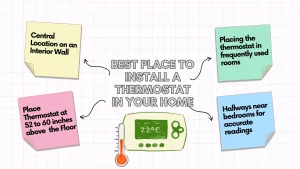
Central Location on an Interior Wall
One of the best places to position your thermostat is central location on an interior wall.
A centrally located wall is exposed to the same airflow as temperature conditions as the rest of your home and can be the accurate representative of overall condition.
Moreover, interior walls are preferred over exterior walls because it is not affected by outdoor heat, cold, and insulation gaps.
So, placing the thermostat centrally on the interior wall away from windows, doors, and exterior walls prevents the risk of false reading caused by weather or heat transfer through walls.
Because of this, it is the most recommended location by professionals!
Ideal Thermostat Height From the Floor
The most recommended height for installing a thermostat is 52 to 60 inches or about 4.5 to 5 feet above the floor.
BUT WHY?
There is a scientific reason for this height. Usually when we heat or cool the room, the warm air being denser and heavier rises to the upper part of the room whereas cool air is less dense, so it moves down.
Therefore, the thermostat is placed at midpoint, not too high, not too low to be affected by floor-level cold air and ceiling-level heat. This allows the HVAC system to respond more accurately and maintain consistent comfort throughout the home.
Best Rooms for Thermostat Placement
If you want to place thermostat in the room you can consider the following ones:
Living Room
As it is mostly utilized by most people during daytime so it’s very important to keep the temperature and comfort level maximum. Moreover, the living room has proper air vents, open space, and fewer closed doors due to which air spreads evenly and the thermostat represents true reading.
Hallway near Bedrooms
Hallways near bedrooms and sleeping areas are considered as a central point of the home that is not affected by heating or cooling appliances and devices of the bedrooms. This means that hallways reflect the overall average temperature. And controlling the whole home temperature with respect to it will be more reasonable.
More Frequently Used Rooms
Frequently used rooms are most ideal for thermostat placement because you spend most of your time there and it must be more comfortable as compared to the rest of the house not used frequently. By placing the thermostat in your most frequently used room, you control the whole temperature based on this room. This prevents false readings and gives maximum comfort by avoiding overheating and overcooling issues in the areas that matter most.
DO NOT PLACE THERMOSTAT IN ROOMS WITH EXTREME TEMPERATURE FLUCTUATIONS LIKE KITCHEN, BATHROOMS, LAUNDRY ROOM!
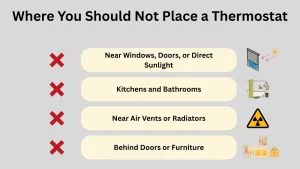
Where You Should Not to Place a Thermostat
If your thermostat is recording false reading then it will turn off and on at inaccurate times and affect the HVAC performance. There are some places in your home that generate wrong signals like kitchen, places near windows and doors. So, it’s recommended to not place the thermostat in those locations. Let’s have a look at those places.
Near Windows, Doors, or Direct Sunlight
Windows and doors can generate false temperature signals. Sunlight coming from windows makes the temperature surrounding windows a bit higher than normal and traps the thermostat in thinking that temperature is higher than optimum and switches on cooling. Similarly, cold air from doors and windows trap the thermostat to think that temperature is lower than optimum and turn on heating. This affects the performance of HVAC systems and unnecessary overheating and overcooling.
Kitchens and Bathrooms
There are frequent temperature changes in the kitchen due to cooking and in bathrooms due to excessive use of water and geysers. So overall, these rooms cannot be representative of overall temperature and air condition. A thermostat in these rooms can react to short-term temperature spikes instead of actual comfort levels, leading to inefficient heating or cooling.
Near Air Vents or Radiators
If the thermostat is placed near air vents and radiators, it will receive hot and cold air directly from them. As a result, it detects false signals that are not representative of overall temperature and air conditioning of the home and might turn off the system too quickly. These short cycles reduce comfort and put an extra burden on the HVAC system leading to high bills and wastage of energy.
Behind Doors or Furniture
If you have placed the thermostat wrongly hidden behind the doors and shelves, it cannot sense the airflow properly. As a result, it can only respond to the air trapped behind doors and furniture rather than the actual airflow. This leads to uneven heating and cooling throughout the home.
How Incorrect Thermostat Placement Affects Energy Bills
Incorrect thermostat placement affects energy bills because your thermostat responds to inaccurate information which leads to incorrect information.
Lets understand it with an example. Suppose you have set the optimum temperature to 25 C and you have either placed the thermostat wrongly or at an ineffective place due to which it is reading the temperature wrongly.
Now the actual temperature of air flow and interior is around 26 C but instead it reads 29 C due to placement near the window or door. So, the thermostat will turn on the air conditioning system to cool down the temperature to reach 25 C. In actuality, only 1 C was needed to reach the optimum temperature. But due to faulty reading it cools down 4 C and reaches 25 C. The temperature around the window comes to 25 C but in the rest of the home the temperature will be 22 C that is less than optimum.
The system has worked more, utilized more energy leading to more bills but still required comfort is not gained.
Poor thermostat placement leads to following issues:
Short Cycling
Short cycling means that your heating or cooling system turns on and off quickly and frequently upon detecting the wrong temperature.
For example, if the thermostat is near a vent, sunlight, or a heat source, it may think the home has already reached the desired temperature. The system shuts off too soon, then turns back on again when the temperature quickly changes.
This constant stopping and starting:
- Uses more electricity and fuel
- Reduces system efficiency
- Increases wear on HVAC components
All of these lead to higher monthly energy bills.
Overheating in Winter and Overcooling in Summer
When the thermostat is placed at a spot warmer than the average or cooler than average spot. It will lead to overheating and overcooling resulting in high bills and uncomfortable internal conditions.
The result is:
- Uncomfortable indoor temperatures
- Excessive HVAC runtime
- Unnecessary energy use
Even small temperature errors can significantly impact heating and cooling costs over time
Thermostat Placement for Different Home Types
The best thermostat location varies based on design, size and layout plan. What works well in one type of home may not work in another. So, let’s go through the best thermostat placement based on different layouts and building levels.
Apartments and Small Homes
In the apartments and small houses, there is very limited space and walls are shared with neighbors. So, you have to be very thoughtful in choosing the best compromising location.
As the small houses heat and cool faster, therefore a minor placement issue can lead to noticeable temperature variation. So for the small houses and apartments best location can be:
- Interior wall
- Away from kitchen, vents, windows and doors
- Main living room that has more utility and the comfort of which matters more.
Multi-Story Homes
In multi-story buildings and houses, maintaining temperature with one thermostat is very difficult because of the convection of the air. Hot air rises above making the upper story warmer and cold air settles below making the lower story cooler. This results in an imbalance in temperature across the home.
In such circumstances, it is recommended to use zoning systems or remote temperature sensors that allow different floors to be controlled separately.
If zoning is not available, then placing the thermostat at the interior wall of the central location can be comparatively better and help prevent a wide range of fluctuations.
Open Floor Plan Homes
Open floor plan homes present airflow challenges because large spaces allow air to move freely and unevenly. High ceilings, wide openings, and large windows can create warm and cool pockets throughout the space.
Open floor plane homes have high ceilings, wide openings, and large windows. Such homes have large spaces that allow air to move freely and unevenly. In such layout, it is reasonable to place thermostat
- On central interior wall
- Away from windows and vents
- An area with steady airflow
- A location away from direct sunlight
Smart Thermostat Placement — Does Location Still Matter?
Although smart thermostats use advanced software and automation, they still depend on physical temperature sensors to decide when to turn on and off heating and cooling.
Just like traditional thermostats, smart ones respond to the temperature in its immediate surroundings. So, if the reading is distorted, the thermostat acts abnormally. One difference between traditional and smart thermostat is that smart ones act quickly and more frequently, amplifying the impact of bad placement. Moreover, smart thermostats learn patterns over time, poor placement can cause them to learn the wrong behavior, locking in inefficiencies rather than fixing them.
So, yes location still matters in case of smart thermostat because smart technology improves decision making but only when it receives accurate information.
There are some smart thermostats that support remote sensors. In such thermostats, there are many temperature sensors that sense the temperature from different locations of the house and send data to the main sensor that decide according to the data but still thermostat placement is central to controlling the optimum temperature and comfort of house
Checklist for Correct Thermostat Placement
The perfect location for thermostat placement is as follow:
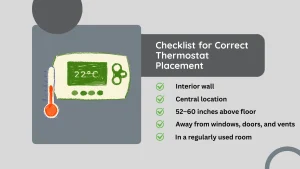
- Interior wall
- Central location
- 52–60 inches above floor
- Away from windows, doors, and vents
- In a regularly used room
FAQs About Thermostat Placement
1. Where should a thermostat be placed?
The thermostat must be placed on the central interior wall at a height of about 52–60 inches above floor; not too high, not too low but mid way of the wall. Place it away from doors, windows, and vents so it represents the overall internal temperature rather than any faulty value.
2. What height should a thermostat be installed?
Place the thermostat at 52 to 60 inches or about 4.5 to 5 feet above the floor. At that point, the thermostat is almost at the mid of the wall and is least affected by convection of air.
3. Can thermostat placement affect energy bills?
Yes, thermostat placement affects the energy bill. If it is wrongly placed, sensors will either overheat or overcool home based on faulty reading. Overheating and overcooling mean more consumption with less comfort. If placed at the right place, sensors accurately detect the temperature and the HVAC system works perfectly without excessive heating or cooling leading to optimum energy bills.
4. Is hallway thermostat placement okay?
Hallways near bedrooms and sleeping areas are considered as a central point of the home that is not affected by heating or cooling appliances and devices of the bedrooms. This means that hallways reflect the overall average temperature. And controlling the whole home temperature with respect to it will be more reasonable.
5 Does thermostat placement matter with smart thermostats?
Yes, although smart thermostats use advanced software and automation, they still depend on physical temperature sensors to decide when to turn on and off heating and cooling. Just like traditional thermostats, smart ones respond to the temperature in its immediate surroundings. So, if the reading is distorted, the thermostat acts abnormally. Remote sensors linked to smart thermostats at different points in your home can make it better but still right placement is necessary.