

Thinking about giving your kitchen a facelift? You’re not alone. For many homeowners, the kitchen is more than just a place to cook—it’s the heart of the home. And when it starts to feel outdated, cramped, or just plain hard to work in, it can take the joy out of everyday living. The good news? A smart kitchen remodel can completely transform your space—and not just in looks.
Done right, a kitchen makeover boosts your home’s value (up to 80% ROI according to real estate experts), cuts down energy bills with smarter appliances, and gives you a layout that actually works for your lifestyle.
But there’s more. Updating your kitchen also makes your home safer and more efficient. From slip-resistant flooring to better ventilation and up-to-code electrical work, a remodel reduces risks you might not even think about until something goes wrong. And if your family is growing—or if you’re planning to stay in your home for the long haul—designing a kitchen that evolves with you is a decision you’ll never regret.
So, is a kitchen remodel worth it? Absolutely. And if you’re ready to take that first step—or even just curious—don’t wait. The right planning today can give you the kitchen (and the home) you’ve been dreaming about.
So, let’s start our blog and discuss what it takes to remodel your kitchen and which mistakes should we avoid to make it a best kitchen where you make memories while cooking and eating!
Before you move to picking tiles or testing paint swatches, let’s talk about the budget. Because no matter how small or grand your vision is, setting a solid budget will keep your kitchen makeover from going off the rails.
Read more: Budget-Friendly Flooring Options for Your Old Home
Set Your Budget: How Much Does a Kitchen Makeover Cost in 2025?

We’ve all heard that remodeling your kitchen is worth it—and it is. But let’s be real: it’s also one of the biggest financial decisions you’ll make for your home. Whether you’re just tired of bumping into your fridge every time you pull something from the oven, or you’re dreaming of a total gut job, figuring out what you’ll spend in 2025 comes down to one question: What do you really want out of your kitchen?
The Price Tag: From Cosmetic Fixes to Full Makeovers
According to the National Kitchen & Bath Association, a mid-size kitchen makeover now rings in at around $71,159, while larger, more elaborate remodels climb beyond $137,000. That’s not pocket change. But if you’re keeping things light—like painting cabinets, swapping hardware, or updating a backsplash—you might be closer to $20,000–$35,000.
Every material, layout change, or finish choice plays a role in the final cost. Think of it less like picking a new wall color and more like building something you’ll live in every single day.
DIY vs. Hiring the Pros
If you’ve got a solid Pinterest board and know your way around Home Depot, designing it yourself could save you 12–20% of your total budget. But for many homeowners, bringing in a pro ensures things get done right—and faster.
- A small facelift handled by a designer might start at $2,500, covering finishes and fixture curation.
- A full redesign with custom touches? That can go well past $8,000, especially if there are layout changes involved.
- Don’t forget about contractors. Labor typically takes up 15–25% of your overall budget—that’s around $10,000 to $17,500 on a mid-range project—and includes plumbing, electrical, and skilled trades.
Splurge Smart, Save Strategically
Not every part of your kitchen needs to be top-of-the-line. But there are some areas where spending more upfront pays off in the long run.
- Countertops
- Cabinetry
- Lighting
Places you can save without regret:
- Backsplash and paint: Machine-grade tiles or basic ceramics still look sharp and start at around $4–$8 per sq.ft.
- Modular cabinets: Options from places like IKEA can look high-end with the right design touches.
- Appliances: Unless you’re cooking for a crowd nightly, mid-range brands like Whirlpool or GE are more than enough.
One Last Thing: Expect a Few Surprises
Even the best-planned remodels come with drawbacks. A smart move? Keep 10–15% of your total budget on standby for the unexpected—like plumbing issues, shipping delays, or that mystery pipe hiding behind the wall. That extra buffer can turn a crisis into just another to-do on your list.
Now that you’ve got a handle on your budget, it’s time to put a real plan in place. A kitchen makeover can get messy fast—this checklist will keep you grounded and help you start strong, no matter the size of your project. So, let’s discuss it!
Kitchen Makeover Planning Checklist

So, you’re ready to refresh your kitchen—great call. Whether it’s a full-blown remodel or just a few thoughtful upgrades, having a plan will save you from those mid-project headaches (and overspending on drawer pulls). Here’s your go-to checklist before the first hammer swings.
Get Clear on Your Goals
Why are you remodeling? Outdated appliances? Not enough space? A layout that just doesn’t flow? Figure out your “why” before your “what.”
- Need better storage or function?
- Craving a fresh, modern look?
- Is timing important—like a big event or move-in date?
Know Your Budget—Really Know It
Are you thinking full renovation or a cosmetic glow-up? Be honest with your wallet and plan for surprises.
- Full layout change or just some new hardware and paint?
- Don’t forget the small stuff—drawer organizers, light switches, knobs—they add up fast.
- Build in a 15–20% buffer for the unexpected.
Choose Your Style Early
Whether you’re drawn to sleek and modern or warm and rustic, pick a design lane before you start shopping. It keeps things cohesive and saves you from decision fatigue.
Order Materials (and Permits) Ahead of Time
Delays happen. Plan around them.
- Lock in appliance sizes early.
- Check if your project needs a permit—especially for plumbing or layout changes.
- Go eco-friendly if you can—green appliances often mean rebates and lower bills.
Plan for the Mess
Remodels are loud, dusty, and disruptive.
- Set up a temp kitchen if needed—microwave meals on the couch, anyone?
- Protect nearby rooms and furniture from dust.
- Figure out where to store deliveries like cabinets and tile.
Expect the Curveballs
Little things can turn into big headaches if you don’t think ahead.
- Will that new fridge fit through the door?
- Do your outlets match your new appliances’ needs?
- Is your plumbing and wiring up to code?
Map Out a Realistic Timeline
Some steps have to happen in order, and delays are normal. Lay it out like this:
Demo → Electrical → Plumbing → Floors → Cabinets → Counters → Backsplash → Paint → Lighting
Plan for extra time—and a little chaos.
This is your space—have fun with it. A colorful backsplash, open shelves, or even a chalkboard wall can make your kitchen feel like you without breaking the bank.
Not every kitchen needs a full-scale renovation to feel brand new. In the next section, we’ll walk through some budget-friendly makeover ideas that actually work—perfect if you’re looking to refresh your space without taking on a major remodel.
Budget-Friendly Kitchen Makeover Ideas That Actually Work
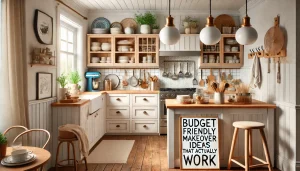
Think a kitchen makeover has to cost a fortune? Not really. You don’t need a full remodel to breathe new life into your space. Sometimes, it’s the simple upgrades—a fresh coat of paint, a thrifted pantry door, or new light fixtures—that quietly transform everything. Whether you’re working with a tiny galley or a dated 90s setup, these ideas prove you can get that “wow” feeling without draining your savings.
1. Repaint, Don’t Replace
Cabinets are one of the first things people notice, but replacing them can wipe out your budget fast. If yours are solid, give them a second chance with paint. One homeowner we know went with a mix—deep navy on the lowers, natural wood on the uppers—and suddenly, the whole room felt intentional and calm. Others go all-in with one soothing tone for a clean, color-drenched look. Either way, paint is still one of the cheapest ways to make a kitchen feel brand new.
2. Makeover Your Cabinet Doors
Can’t justify ripping out the whole unit? Don’t. Try this: pop out the center panels and slide in something fresh like patterned sheet metal or beadboard. It gives a custom, vintage charm without custom pricing. Add new hardware—maybe matte black or antique brass—and you’ve just given your kitchen a style story of its own.
3. Keep the Layout, Change the Look
It’s tempting to dream about knocking down walls and shifting everything around, but that’s where budgets balloon. Instead, consider what staying put saves you. One couple ditched their peninsula for a freestanding island and left the rest untouched—plumbing, appliances, and all. The space felt bigger, breezier, and the costs stayed down.
4. Trade Cabinets for Open Shelves (or Secondhand Finds)
Taking down a few uppers and replacing them with open shelves can change the vibe instantly. It opens up the room and gives you a chance to show off your favorite mugs or dishes. Don’t sleep on secondhand stores either—one homeowner scored a stunning old pantry door for $40 and it became the star of their remodel.
5. Backsplash That Doesn’t Break the Bank
Subway tile is classic for a reason—it’s affordable, versatile, and it plays well with almost every style. But don’t be afraid to experiment. Try installing it in a herringbone or vertical pattern, or go bold with a painted stencil backsplash that looks like real tile but costs a fraction of the price.
6. Don’t Forget the Ceiling and Floor
It’s easy to focus only on what’s eye-level, but changing the ceiling or floor can completely shift how your kitchen feels. Some folks install faux wood beams or paneling for rustic character. Others just paint the ceiling a contrasting color. On the floor? Try peel-and-stick tiles or chalk-painted stencils for a low-cost lift.
Before You Start: DIY or Hire a Kitchen Contractor?
Before you start dreaming about ripping out cabinets or scrolling for backsplash ideas at 2 a.m., hit pause—and ask yourself one very real question: Am I doing this myself, or am I calling someone in?
It’s easy to get swept up in the excitement. Maybe you’ve watched a few tutorials, saved 50 Pinterest boards, and convinced yourself that with a free weekend and a paintbrush, you’ve got this. And in many cases—you honestly might.
But kitchen remodeling has a funny way of going from “fun weekend project” to “why is there a pipe sticking out of the wall?” faster than you think.
So, let’s break it down!
What’s Actually Great About DIY
The most obvious perk? Saving money. Labor eats up a huge chunk of any remodeling budget, and if you’re fairly handy (or at least willing to learn), DIY can help stretch your dollars further than you’d expect.
But it’s not just about cost. There’s something incredibly satisfying about doing it yourself. Repainting your own cabinets. Laying tile with your own two hands. Installing floating shelves you measured and leveled yourself. You don’t just end up with a refreshed kitchen—you get that quiet pride every time you walk in.
Plus, you’re on your own clock. Work in the evenings, on weekends, or whenever the mood strikes. No waiting around for someone to show up three days late. No rescheduling because the contractor got pulled to another job.
But Let’s Be Honest… DIY Isn’t Always a Win
Here’s where things get real. That “weekend project” can drag on for weeks. You start painting cabinets, realize they need to be sanded and primed, your paint bleeds, you hate the finish—and suddenly you’re eating dinner on folding chairs in the garage.
And then there’s the stuff you really shouldn’t touch unless you’re qualified—plumbing, wiring, structural changes. A wrong move here doesn’t just mess up your remodel—it could damage your home, break the law, or worse, become a safety risk.
It’s not just about skills either—it’s about time. Do you have enough of it? Can you finish what you start without sacrificing work, family, or your sanity?
When It’s Time to Call the Pros
If you’re just giving your kitchen a little facelift—like painting, swapping out knobs, adding a new backsplash—go for it. Those are manageable, even fun.
But if your plans involve:
- Moving a sink, gas stove, or major appliance
- Touching electrical wiring or adding new lights
- Knocking out walls or changing the layout
- Dealing with permits, codes, or inspections
Here are a few trustworthy names:
- Kitchen Tune-Up – Known for cabinet refacing and full kitchen refreshes.
- Kitchen Saver – East Coast-based, great for updating layouts without tearing everything down.
- Kitchen Magic – A long-standing name for East Coast remodels, especially custom cabinetry.
- USA Cabinet Store – Good mix of affordability and craftsmanship, serving DC, Maryland, and Virginia.
In the next section, we’ll cover the most common kitchen makeover mistakes—even experienced homeowners slip up on these—and how to avoid them so your renovation stays smooth, on-budget, and stress-free.
Common Mistakes to Avoid During a Kitchen Makeover
Kitchen makeovers can be exciting—until they start eating into your budget or dragging out for weeks because of one overlooked detail. Whether you’re painting cabinets or reimagining your entire layout, skipping key steps or rushing decisions can come back to bite you. We asked seasoned pros—designers, builders, and flooring experts—for the biggest mistakes homeowners make during kitchen remodels. Here’s what to keep on your radar so your dream kitchen doesn’t turn into a cautionary tale.
Mistake #1: Skipping the Planning Phase
You wouldn’t start a road trip without a map—so don’t start tearing out cabinets without a plan. Architect Michael Menn says too many people jump into remodeling without thinking through how the space will actually function. Ask yourself: How do you use your kitchen every day? Is this layout going to work five years from now?
Planning isn’t just about style—it’s about lifestyle. And yes, that means being honest with yourself about budget and maintenance. Love the look of stainless steel? Great—but if sticky fingerprints will drive you up the wall, it may not be the right call for your family.
Mistake #2: Underestimating the Budget (and the Buffer)
Here’s the golden rule: whatever your budget is, add 15–20% on top. Why? Because even with careful planning, there are always surprises—plumbing issues, delayed materials, or those “while we’re at it” upgrades. Skimping on the research also leads to last-minute purchases that can blow your budget. Take your time picking out materials, finishes, and appliances so you’re not scrambling mid-project.
Mistake #3: Picking Cabinets Before Appliances
It sounds harmless—but buying your cabinets before your appliances can throw your entire design off. HGTV’s Egypt Sherrod warns that even an inch or two can make or break your layout. Nail down your appliance sizes first so your cabinets fit like a glove. Better yet, opt for panel-ready models that blend right into your cabinetry for a seamless look.
Mistake #4: Installing Cabinets Before Flooring
Paul Henthorn of Slaughterbeck Floors advises holding off on cabinet installation until your flooring is in. Why? Cabinets pin the floor down, which can mess with its natural expansion and make repairs harder later. Install floors first, then cabinets—it’s cleaner, safer, and saves you future headaches.
Mistake #5: Choosing the Wrong Type of Flooring
Not all hardwood is created equal—especially in kitchens. High-traffic, spill-prone areas need durable, textured finishes. Think hickory or pre-sealed hardwood with a high Janka rating. And while cork is comfy and eco-friendly, it fades fast in sunlight. For safety, place rugs near sinks and stoves—these are your slip zones.
Mistake #6: Ignoring the “Kitchen Triangle”
You may love how your kitchen looks on Pinterest, but if your sink, stove, and fridge are awkwardly spaced, cooking becomes a chore. Keep them within a few feet of each other to stay efficient. Kitchen islands can help make this triangle work—just don’t cram them in if the space doesn’t allow it.
Conclusion
Here’s the truth—your kitchen isn’t just where you cook. It’s where life happens. It’s late-night tea and early-morning toast. It’s where birthday cakes get frosted and leftovers turn into lunch magic. Giving it a little love can change how your whole home feels.
Whether you’re elbow-deep in paint or just gathering quotes from contractors, remember this: you don’t have to do it all at once. Start small, stay realistic, and don’t lose sight of what matters—creating a space that feels good to be in. One that fits your routines, your people, and your style.
So if you’re staring at chipped cabinets and dreaming of subway tile, take it as a sign. Open that notebook. Make the list. Start somewhere. Your future kitchen? It’s not out of reach—it’s just waiting for you to take that first step.
FAQs
Is a kitchen remodel worth all the mess and money?
Heck yeah, if you do it with a game plan. Sure, there’ll be some chaos—dishes in the living room, anyone?—but the payoff is so worth it. A smart remodel doesn’t just make your kitchen look like it belongs in a magazine. It can bump up your home’s value (we’re talking 60–80% of your investment back), save you cash on energy bills with snazzy new appliances, and make cooking or hosting feel like a breeze. Picture this: no more wrestling with jammed drawers or dodging cramped corners while making dinner. That’s the kind of kitchen that makes every day better.
How much is this gonna cost me in 2025?
No two kitchens are the same, but here’s the lowdown. If you’re just giving your space a little love—think fresh paint, new lights, or some cool drawer pulls—you might spend $5,000 to $15,000. Want the full shebang with brand-new cabinets, flooring, and fancy appliances? That could run you $30,000 to $70,000, or even more if you’re going all-out with luxe touches. Word to the wise: tack on an extra 15–20% to your budget for those “oh no” moments, like finding ancient pipes that need fixing.
Can I save a few bucks by doing it myself?
You bet, but only for the stuff you’re comfy with. If you’re a whiz with a paintbrush or love tinkering with small projects like swapping out cabinet knobs, go for it—those can cut costs. But when it comes to big jobs like plumbing, wiring, or knocking down walls? Leave that to the pros. One oops—like a wonky electrical job or a pipe that decides to leak—can cost way more to fix than hiring someone who knows their stuff. Plus, you don’t want to mess with anything that could make your home unsafe.
How long am I stuck living in a construction zone?
Depends on how big your dreams are. A quick refresh, like new countertops or a splashy backsplash, might wrap up in 2–4 weeks. Going for a total kitchen overhaul with all the bells and whistles? Brace yourself for 2–3 months, maybe more if permits get held up or your dream tiles are stuck in shipping limbo. To keep your cool, set up a makeshift kitchen somewhere else—stock it with a microwave, your trusty coffee maker, and a big dose of patience. Pro tip: paper plates are a lifesaver.