
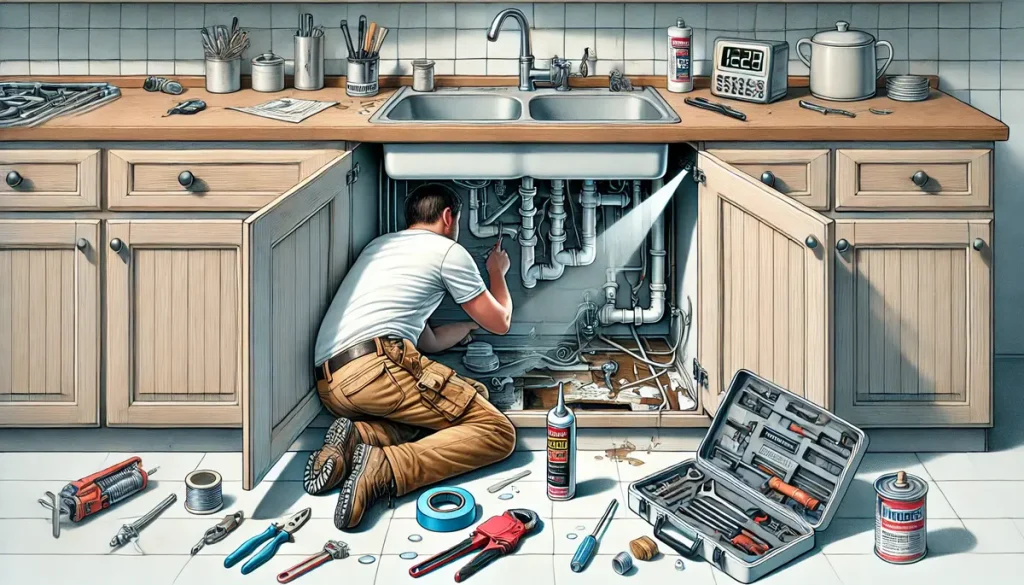
Plumbing leaks never wait for the right time. A faucet may start dripping. A toilet seal may become loose. Both can quickly turn into bigger problems. Checking your plumbing regularly helps. Small fixes prevent stress later. A little care today can save you a lot of money.

The Most Common Places for Plumbing Leaks in Your Home
Some spots in your home are more likely to leak. Check these areas often. It helps you catch problems early. It also prevents costly damage.
Areas to Check for Plumbing Leaks
- Around the toilet: Look for damp floors or mold at the base. Even a small leak can quickly weaken the flooring.
- Under the sink: Open the cabinets in your bathroom and kitchen. Check for water stains. Feel for damp wood. Notice any musty smells.
- At the base of the water heater: Watch for drips near the tank. Check the pressure valves. Even slow leaks can cause rust. They can also damage the floor around the heater.
- Behind the washing machine: Inspect the hoses. Cracks or loose connections may let water leak into the wall. Leaks here can also soak the floor.
- Showers and tubs: Look for loose tiles. Check grout lines for mold. Notice if the water pressure drops. These may be signs of a hidden leak.
- Exterior spigots: Check outdoor faucets for puddles. Feel for damp walls nearby. Even small leaks outside can waste gallons of water.
- Ceilings: Look for stains or wet spots. This often means a pipe or bathroom above is leaking.
Checking these areas only takes a few minutes. But it can save you from major repairs later.
Read More: How Can You Prevent Roof Leaks?
Identifying the Most Common Plumbing Leaks
Not all plumbing leaks are the same. Some leaks are easy to see. Others stay hidden. Hidden leaks slowly damage your home. Let’s look at the most common leaks in bathrooms and kitchens. We’ll also look at simple ways to spot and fix them.
Splash Leaks (Bathtubs and Showers)
Splash leaks are very common. They happen when water slips past the shower curtain. They also happen when water gets past the shower door. The water then soaks into the floor. It can also soak into the walls.
Even a small splash leak can cause big problems. Water seeps into the subfloor. Tiles may loosen. Wood can rot. Sometimes you may even need to replace the whole subfloor.
Signs of Splash Leaks:
- Peeling paint near the tub
- Curling vinyl near the tub
- Mold or mildew around the shower
- Water stains on the ceiling below the bathroom
How to Fix Splash Leaks:
- Keep the shower curtain or door fully closed.
- Add a splash guard if needed.
- Replace old gaskets.
- Recaulk gaps around the shower frame.
Tub and Shower Drain Leaks
Drain leaks happen around the drain. They occur where the drain connects to the tub. They are common in plastic tubs. They are also common in fiberglass tubs. These tubs flex when you stand inside them.
Drain leaks can ruin ceilings under the bathroom. They can also damage nearby floors. If you see damp flooring, it may be a drain leak. If you see water stains on ceilings, it may be a drain leak.
How to Fix Drain Leaks:
- Use a test plug. Fill the tub or shower with water. Mark the water level. Check later to see if it drops.
- Reseal the drain with silicone caulk.
- Replace the rubber gasket if needed.
- Tighten loose drain connections.
Catching these leaks early saves money. It also prevents bigger repairs.
Toilet Flange Leaks
Toilet flange leaks happen at the base of the toilet. The wax ring seals the toilet to the pipe. Over time, this wax ring breaks down. Each flush lets water escape. This water damages the subfloor. It also damages the joists below.
Signs of Toilet Flange Leaks:
- Water pooling around the toilet base
- Loose flooring near the toilet
- Damaged flooring near the toilet
- A toilet that rocks when you sit on it
How to Fix Flange Leaks:
- Replace the wax ring.
- Add a plastic flange riser if the flange is too low.
- Use toilet shims to steady a rocking toilet. This keeps the seal strong.
Sink Rim Leaks
Sink rim leaks are harder to notice. They happen when water seeps under the sink rim. They also happen when water seeps under the faucet base. Over time, this water damages cabinets. It can also damage countertops.
Look for puddles inside cabinets. Water stains are another sign. Loose caulk may mean a leak. A wobbly faucet base may also mean a leak.
How to Fix Sink Rim Leaks:
- Tighten the faucet base with the mounting nuts.
- Apply fresh caulk around the sink rim.
- Tighten the clips that hold the sink to the countertop.
These simple fixes protect your cabinets. They also save you from costly replacements.
Diagnosing Hidden Plumbing Leaks
Hidden plumbing leaks are a nightmare for homeowners. Obvious leaks are easy to see. They leave puddles. They drip from faucets. Hidden leaks are different. They stay out of sight for weeks. Sometimes they stay hidden for months. During this time, they slowly damage your home.
Leaks often hide behind walls. They can also hide under floors. They may even be inside ceilings. By the time you notice them, the damage may already be serious. Moisture can rot wood. It can warp drywall. It can grow mold.
These problems lead to costly repairs. They can also create health risks for your family. The good news is that you can catch hidden plumbing leaks early. You just need to look for the signs. You also need to listen for the signs.
Signs of Hidden Plumbing Leaks
You may not see water. But your home gives clues. Look for yellow stains on walls. Look for brown stains on ceilings or floors. These spots are often round. Moisture behind walls can make paint peel. It can also make wallpaper bubble. A musty smell is another warning. Dark spots in dry areas often mean mold. They may also mean mildew.
Uneven floors are another clue. Hardwood can warp. Laminates can swell. Tiles may come loose when water leaks underneath. Finding these signs early can save you from bigger problems later.
Using Your Water Meter to Detect Leaks
Your water meter can confirm a hidden leak. You can try this simple test. First, turn off all water sources. Shut off faucets. Turn off toilets. Shut down appliances, hoses, and sprinklers.
Then, find your water meter. It is usually outside near the street. Sometimes it is in a utility room. It has a dial or a digital screen. Write down the current number. Leave the water off for one to two hours. Do not use any water at that time.
After waiting, check the meter again. If the numbers change, water is still flowing. That means there is a leak. This test works for leaks inside walls or floors. It helps when you cannot see the leak.
Listening for Water Sounds
Sometimes you can hear leaks. You may not see them, but you can hear them. Listen when the house is quiet. Nighttime is best. A steady drip may mean water is escaping. It could be behind walls or floors. A hiss, like air escaping, may point to a pipe leak. If you hear running water when faucets are off, you likely have a leak. These sounds are small but important clues. They show your plumbing is losing water.
Inspecting Ceilings, Walls, and Floors
A visual check also helps. Leaks almost always leave marks. Ceilings often show signs first. Look for stains. Watch for sagging. Notice bubbling paint. These are signs of water leaking from above. Walls can show damage too. Warping, peeling paint, or soft spots mean water is behind drywall.
Floors also reveal leaks. Damp patches are a warning. Uneven boards are another sign. Loose tiles often mean water is seeping underneath. Check these areas often. Catching leaks early prevents bigger and more costly damage.
Steps to Prevent Future Plumbing Leaks
The best way to deal with leaks is to stop them before they start. Prevention saves stress. It saves money. It also protects your home from water damage. With regular care, you can avoid big repairs.
Regular Inspections
Check your plumbing every few months. Focus on bathrooms. Check kitchens. Look at basements too. Inspect seals and caulking around sinks, tubs, and showers. Reapply caulk if it looks cracked or worn. Check faucets and pipes for drips. Tighten loose parts. Replace old washers to stop leaks. Watch your water pressure. High pressure can strain and damage pipes.
Maintain Toilets and Showers
Toilets and showers are common places for leaks. Replace the wax ring if water gathers around the toilet base. Tighten loose showerheads. Tighten faucets too. Keep drains clear. Clogs create pressure. That pressure can lead to leaks.
Proactive Plumbing Upgrades
Old pipes and parts fail often. Replace galvanized pipes with copper or PEX. Replace lead pipes too. Upgrade shutoff valves. New valves let you cut off water quickly in an emergency. Add a leak detection system. These devices give early warnings if water escapes.
Monitor for Signs of Damage
Stay alert for damp spots under sinks. Look behind appliances. Check around fixtures. Watch for mold. Mold often means hidden water. Track your water bills. A sudden jump usually means a leak.
FAQs About Finding and Repairing Hidden Plumbing Leaks
How do I know if there’s a hidden plumbing leak in my home?
Your home gives small hints. Look for water stains on walls. Check ceilings and floors for spots. Notice if paint is peeling. Watch for musty smells. Pay attention if floors start to warp. Each of these signs can point to a bigger hidden problem.
Where do plumbing leaks usually happen?
Some spots leak more often than others. Toilets are a common source. Sinks can leak too. Water heaters often drip near the base. Washing machines can leak from hoses. Showers and tubs also cause leaks. Outdoor spigots may waste water. Even ceilings can show signs of hidden leaks.
Can I really use my water meter to find a leak?
Yes, you can. First, turn off everything that uses water. Then, write down the meter reading. Wait one to two hours without using water. Check the meter again. If the numbers have moved, there is a leak.
What if I hear dripping or hissing but don’t see water?
Listen carefully. A steady drip is a warning. A faint hiss is also a warning. Both sounds can mean water is escaping. It may be behind walls. It may be under floors. It may be inside pipes. Do not ignore these sounds. Check the area right away.
How can I stop leaks from happening in the first place?
Prevention is simple. Check your plumbing every few months. Tighten loose fixtures. Replace worn-out parts. Upgrade old pipes if needed. Install a leak detection system. These steps give early warnings. They also help you avoid big repairs later.