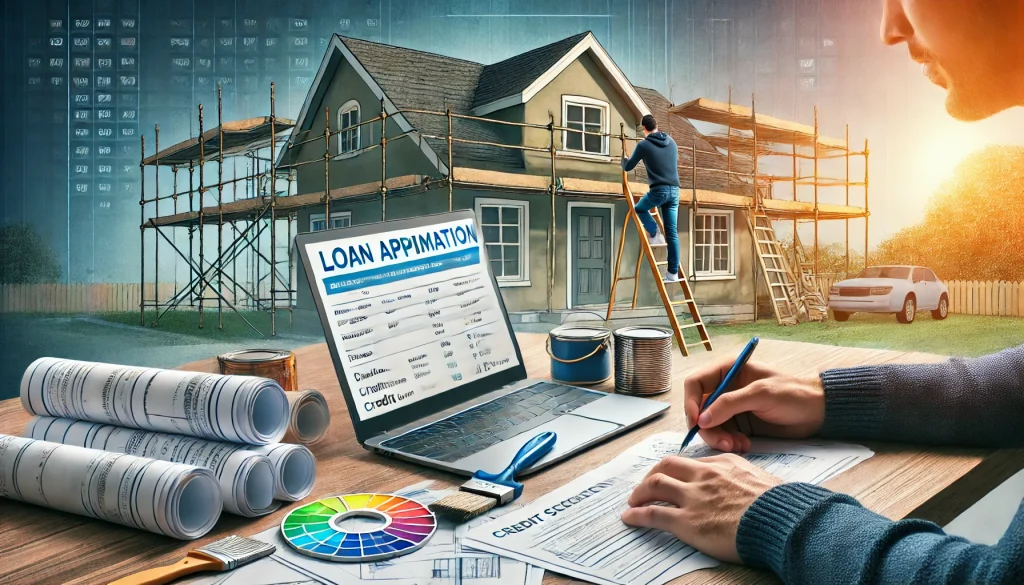
Home improvement loans are a type of personal loan or secured loan used to fund home renovation projects. You can use these loans to cover expenses for remodeling, repairing, or upgrading your home. These loans are available as personal loans, home equity loans, and government-backed loans.
Most of the times these loans are planned for people with good credits but what about people who are more in need of such supports?
People having a credit score below 600 are high risk borrowers because lenders doubt that they won’t be able to return loans they take. Therefore, its very difficult for them to get these loans. In such case, they get approved for loans with higher interest rates and less favorable terms.
But still there are lenders who specialize in bad credit loans and may be willing to work with you. Lets explore some of home improvement loan options for Bad Credit
Get a $10,000 grant for home improvement!
Best Home Improvement Loan Options for Bad Credit in 2026
Here are some of the best home improvement loan options for bad credit in 2026:
FHA 203(k) Renovation Loan
The FHA offers different loan programs to help people with lower income or weaker credit buy and renovate homes. One of the most popular options is the FHA 203(k) loan.
This loan lets you buy a new home or refinance your current mortgage. It also gives you at least $5,000 extra to make improvements in your home.
The FHA does not give loans to you directly. Instead, you have to go to a bank or mortgage company that offers FHA loans. The FHA only supports the loan so the bank feels safe lending to you. FHA makes sure that if buyers won’t be able to pay the loan back and if something goes wrong, we will help.
To get an FHA 203(k) loan, you need a credit score of at least 500. You also need equity in your home. Having equity in your home means you must own a certain portion of your home. For example, if your home is worth $300,000 and you still owe $200,000 on your mortgage, then you have $100,000 in equity. The higher your equity, the more of your home you truly own, and the easier it becomes to qualify for certain loans like the FHA 203(k).
If your credit score is 580 or higher, you need at least 3.5% equity to qualify. And if it is between 579 and 500, then you need 10% or more equity to qualify.
This loan replaces your old mortgage. So, it can be a great choice if the new loan has a lower interest rate than what you pay now. You get a cheaper mortgage and money to improve your home. It’s a win-win for many homeowners.
FHA Title I Loan
Most of the homeowners usually take a new loan to pay back the previous mortgage which has higher interest rate or tougher terms and conditions. But some people don’t want to refinance their mortgage, rather they need it purely for home improvement purposes. FHA Title I loan is especially for such homeowners who want to renovate their home rather than to refinance their mortgage.
A Title I loan works like a simple, normal loan. It stays completely separate from your current mortgage.
With FHA Title I loan, you get two options: whether you want to use your home equity or not.
- If you decide to use your home equity as security (collateral), you can borrow up to $25,000.
- If you don’t want to use your home as collateral, you can still borrow money, but the amount is smaller that is up to $7,500.
These loans also offer flexible term length options, ranging from six months to over 20 years. Like FHA 203(k) loans, however, you can’t use the loan proceeds to purchase “luxury items” like swimming pools, hot tubs, or gazebos.
Home Equity Loan
A home equity loan uses your house as security. That means if you don’t pay back the loan, the bank can take your house. These loans are comparatively easy to secure because the bank has guarantees in the form of your home.
A home equity loan gives you a lump sum of cash up front. It’s a good choice when you need money for a major one-time expenses like a major home renovation or debt consolidation.
HELOC
HELOC also uses your house as security. A HELOC (Home Equity Line of Credit) works more like a credit card. The bank gives you a limit, and you can take money from it whenever you need it, not all at once. You only pay interest on the money you actually use. That flexibility makes HELOCs ideal for ongoing or unpredictable costs, such as phased contractor payments or DIY home improvement projects.
Home Equity Investment
A home equity investment (HEI) is a way to get money without taking a traditional loan. Instead of borrowing and paying monthly payments, an HEI works like a partnership. They give you a lump sum of cash today, and in return, they will take a small share of your home’s future value when you sell or refinance. You don’t need high income, and only a credit score above 500 is required. There are no monthly payments for up to 30 years. You only pay back when your home is sold or refinanced, using some of the profit your home gained over time.
Personal Loan
Many people choose personal loans because they’re relatively quick and easy to get if you have good credit. But if your credit is not good, getting a personal loan becomes harder, and even if someone agrees to give you one, it may be expensive.
Even with bad credit score, you can still find personal loan options. Some lenders are made specially for people who have low credit scores. Three well-known lenders that help people with bad credit are LendingPoint, Avant, and Upgrade.
- LendingPoint is good if you need money fast. They can approve you quickly, even if your credit score is around 585. They give you a fixed amount to pay every month, which makes it easier to plan your budget.
- Avant is helpful for smaller home projects. They lend between $2,000 and $35,000. They accept people with a credit score of 580 or higher. They are known for being flexible with people who have bad credit.
- Upgrade is another option. They sometimes offer bigger loan amounts, which is good if you have a big home renovation. Their required credit score is a little higher than Avant, but they give good rates even for people with poor credit.
Peer-to-peer Lending
Peer-to-peer lending is a way to borrow money directly from other people, not from a bank.
Websites like LendingClub and Prosper connect people who want to borrow money with people who want to lend money. The website sits in the middle and manages everything safely.
These platforms usually have softer credit requirements, so even if your credit is low, you still have a chance to get a loan. It can be a good option when banks say no.
Pros and Cons of Bad Credit Home Improvement Loans
Now let’s discover some pros and cons of bad credit home improvement loans:
Pros
Home improvement loans provide access to funds that allow you to maintain or improve your home. These loans can be a lifeline if you have urgent repairs that need immediate attention.
Whether you’re looking at personal loans, home equity loans, or FHA-backed loans, there are multiple options to explore.
Cons
The downside to these loans is that bad credit often comes with high interest rates. This means you’ll end up paying more over time, and borrowing limits may be lower.
Additionally, secured loans, like home equity loans, put your property at risk if you default on payments.
How to know which option is best for you
As mentioned above, there are so many options to choose from even if you have bad credits. So, we can say it can be a very confusing step for you. In order to ease the decision making, ask yourself the following question and on the basis of your reply, choose what suits you the best!
1. Can you wait a little before taking a loan?
If you can wait a few months, you may be able to improve your credit or save some extra money because better credit means better loan offers. Moreover, if you can wait, you might be able to save and as a result you will borrow less, and that means smaller monthly payments.
So waiting a bit can make your loan much easier and cheaper in the long run. Both of these make things easier and cheaper for you.
2. How much can you pay every month?
So, before deciding which option you should choose, look at your monthly income and analyze properly how much money you can pay. Be careful, because there is a difference between what you can pay actually and what you think to pay
Proper postmortem of our monthly income is important because loans for bad credit can cost a lot. This means the monthly loan installment might be too high for your budget. If the payment doesn’t fit comfortably into your monthly income, then you should look at another option (like an HEI) that may be easier and cheaper for you.
3. How much home equity do you have?
Some loans are cheaper, but they come with a rule: You must already own 20% of your home. This “20%” is called home equity. It means if your home is worth $100,000, you must already own $20,000 of it. If you don’t have that much equity yet, you usually can’t get these cheaper loans.
But if you have very little equity; don’t worry you still have options. In this case you can opt for FHA loans. They do not require you to have 20% equity. They accept lower equity, sometimes even very little, which makes them easier for many people to qualify for.
4. What will the loan really cost you?
If you have bad credit, the interest rate and fees may be higher. To compare loans easily, check the APR. The APR shows the full cost of the loan, so it helps you see which option is actually cheaper by telling you the total cost of the loan. Go for the option which has least APR that you can afford.
How to Improve Credit for Future Loans?
If you can’t find favorable loan terms today, it might be worth waiting a few months while working to improve your credit score.
Debt Consolidation
Using a personal loan to consolidate existing high-interest debts can make your monthly payments more manageable and reduce your overall debt load.
Create a Budget and Stick to It
A budget can help you stay on top of your finances, ensuring you’re meeting your monthly obligations without falling behind.
Monitor Your Credit
Use credit monitoring tools to keep track of your score and report any inaccuracies immediately. This will help you spot improvements and ensure that your credit report reflects your current financial situation.
Automate Bill Payments
Setting up automatic payments can help you avoid missed payments, one of the easiest ways to damage your credit score.
FAQs about home improvement loan with bad credits
1. Can I get a home improvement loan even if I have bad credit?
Yes obviously you can qualify for various loans even with bad credits. You can apply for FHA loans, home equity loans, HELOCs. There are some lenders like LendingClub, Avant, Upgrade, etc. that offer personal loans if you have bad credits. Moreover, peer-to-peer lending option is also available for those who were previously rejected by banks
2. What is the easiest loan to get with bad credit?
All those loans that do not need strict and high credit scores can be secured easily by people with bad credits. Government-backed loans like FHA 203(k) and FHA Title I don’t require high credit scores therefore they are easily qualified. Moreover, secured loans where you can use your home as collateral are also easy to get.
3. How much can I borrow for home improvements if my credit is low?
The amount of money you get as a loan depends on the type of the loan, your equity, and sometimes credit score. Although the owner with bad credits also gets loans, they usually have strict terms. FHA Title I, homeowners with bad credits can get o $25,000 if you use your home as collateral and without home equity they can get up to $7,500. Depending on your credit and income, personal loan lenders may offer between $2,000 and $35,000.
4. How can I improve my chances of getting approved?
Before applying for a loan, you must try to improve your credit score. For this purpose, you must clear all your bills on time. Try your best to lower your already existing loans. Moreover, if your score is still low, using a co-signer with good credits will help you secure a better loan. It’s an indirect way to improve your credits because you are strengthening your bad credit with the good credits of others. Moreover, if you use your home as collateral then you can secure a good loan without good credits, too.