
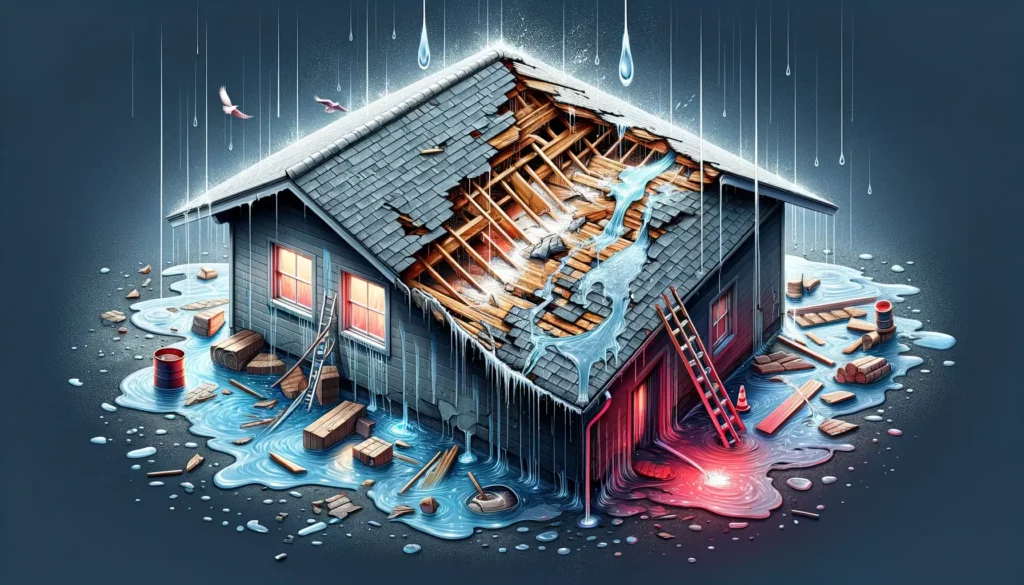
Hidden roofing risks are problems you don’t see until they become costly roof repairs. Small installation errors, flashing cracks, attic ventilation, and storm micro-damage can remain hidden for months. While they remain unnoticed, moisture creeps into the framing, insulation and drywall. Roof-related accounts for an estimated 70% to 90% of insured residential catastrophic losses. This shows how quickly hidden roofing problems escalate if you don’t prevent roof damage early.
The price can sting when these silent issues get noticed. Typical roof leak repair runs around $392 to $1,913. Water-damage restoration often averages $3,800 or more if water spreads indoors. Severe cases cost much more. Many leaks start at metal flashing around chimneys, skylights, and wall joints. These components are designed to stop water at penetrations. Therefore, minor seal failures can quickly worsen. They can turn into structural repairs and mold remediation.
In this guide, you will learn the major hidden roofing risks and how to spot early warning signs. This helps before they become expensive. You will also learn the practical steps to take.

Hidden Roofing Risks
These are unseen problems like leaks, poor installation, or ventilation issues that quietly weaken your roof over time. Let’s discuss these issues in detail!
Poor Roof Installation
When a roof is installed by unskilled contractors or completed hastily, subtle errors like mistakes in alignment, sealing, and structural balance often hide beneath the surface. Crooked panels, improperly fastened shingles, misaligned valleys or flawed underlayment layering contribute directly to roofing installation risks and poor workmanship. Even small gaps or mispositioned fasteners can compromise waterproofing in metal and shingle systems. It can also lead to premature wear.
Over time, these flaws appear and manifest as persistent leaks and sagging roof decks. Due to these hidden flaws shingles may curl or blister and flashing joints may separate. Errors at installation often void manufacturer warranties that leave the homeowner fully responsible for repairs. Structural imbalance can strain the roof framing. This is like uneven load distribution across rafters. This strain causes deflection that weakens supports.
The long-term price is steep as these hidden flaws lead to water intrusion, rot, and diminished insulation. Interior damage can also occur. All these multiply the repair costs. Moreover, homeowner insurance often excludes coverage for damage caused by contractor mistakes and poor workmanship.
To avoid poor roof installation, always hire certified, insured roofing professionals. Request proof of credentials. Ask for verification of manufacturer installation guidelines. Ensure the contract includes compliance with local building codes. These vigilant practices help you avoid hidden costs tied to roofing contractor mistakes.
Hidden Water Damage and Moisture Traps
One of the most insidious hidden roofing problems is water infiltration. This happens without visible exterior leaks. Rainwater can seep beneath compromised flashing through gaps in underlayment. It can also seep through micro-cracks in sealants. This moisture intrusion often occurs internally and is hidden behind surfaces. Because of this, damage accumulates silently.
Homeowners may notice early signs in the form of musty odor in the attic. They might see water stains on ceilings or walls, discoloration on ceilings or walls. Paint or wallpaper might bubble or peel. Ceiling blisters or sagging drywall are also signs of hidden water damage. These symptoms often appear long after the water infiltration starts.
Delaying repairs like drywall collapse, mold remediation, and repainting increases the cost greatly. Persistent moisture leads to structural wood rot. It degrades the roof decking and compromises insulation performance. Wet insulation loses its thermal value. Interior damage can increase repair bills into the thousands.
To prevent hidden water damage and moisture traps, schedule a roofing inspection after heavy rains or storms. Preferably, hire a qualified professional. They should use moisture scanning or infrared imaging. Pay special attention to the flashing and valleys. Also, check the attic sheathing. Early detection and repair are key. They prevent roof leak risks from escalating.
Neglecting Roof Ventilation and Insulation
Attic ventilation is a crucial defense in a roof system. It is often overlooked. It allows air to circulate through intake (soffit vents) and exhaust (ridge vents or roof vents). This regulates attic temperature and moisture levels. Heat becomes trapped when ventilation is inadequate. Humidity also builds up. Over time, this stresses the shingles and speeds up adhesive breakdown, curling, and granule loss. This shortens the roof’s lifespan.
Poor insulation makes the problem even worse. Insulation may not block heat transfer effectively. Then, the attic can conduct heat into living spaces. This forces HVAC systems to work harder and in turn raises energy bills. Warm indoor air can leak into the attic in cold climates. This air condenses on cooler surfaces and promotes moisture buildup and rot.
Ventilation issues and insulation problems collectively become a hidden enemy. Moisture retention causes mold and decay. Heat accelerates material degradation and energy losses increase. Warranties may get voided because proper ventilation is often required for warranties.
To prevent all this from happening, install a balanced airflow system. Ensure a proper ratio between intake and exhaust vents. Schedule routine inspections semiannually or after extreme weather. Clear any obstructions like insulation blocking soffits. Confirm continuous airflow. All these practices help mitigate these roofing maintenance risks.
Flashing and Sealant Failures You Can’t See
Flashing and sealants are critical waterproof barriers. They are used around vulnerable roof penetrations like vents, chimneys, skylights, valleys, and wall intersections. They bridge transitions between roofing materials and adjacent structures. Flashing and sealant prevent water intrusion when well-installed. They prevent it from reaching underlying layers.
However, metal flashing may corrode over time. It may warp or loosen. Simultaneously, sealants degrade due to UV exposure, thermal cycling and moisture. As a result, cracks, shrinkage, or bond failure occur in those sealants. These failures allow water to infiltrate invisibly. Water goes into the sheathing and framing.
These failures are subtle. Leaks may emerge well after the protective barrier breaks down. Homeowners only notice damage much later via water stains, mold, or damp insulation. This is often long after damage has progressed.
To prevent this from happening, schedule seasonal flashing checks especially after hot summers or cold winters. Use binoculars to scan flashing lines from the ground. Inspect physically if it is safe. Look for gaps, rust, sealant cracks, or warped metal. Re-apply or replace compromised flashing. Use quality roofing sealant. It should be rated for UV resistance and movement. This maintains your roof’s integrity. It mitigates hidden roofing risks.
Storm Damage That Goes Undetected
Severe weather like wind, hail, and wind-driven rain often causes invisible damage. Wind uplift forces can loosen shingles. They can pry fasteners under suction pressure. Edges, ridges, and corners are especially vulnerable. Micro-cracks or shingle lifting can occur even when shingles remain in place. These issues can later become leak paths.
Hail causes damages like dents, fractures, or granule loss in shingles. It damages other roofing materials and weakens their water resistance. These defects may not cause leaks right away. They might not show up until weeks or months later.
Many homeowners skip inspections after storms. They assume “if it looks fine, it’s fine.” This mistake is dangerous. Insurance policies may deny claims if hidden damage isn’t fixed promptly.
Ignoring micro-damage allows moisture intrusion. It allows rot and interior damage to escalate. As a result, repair costs can soar into the thousands. Without early detection, materials may degrade too much. Structural sheathing, decking, or insulation may be beyond repair.
To avoid damage due to storms, always schedule a post-storm inspection. Use a qualified roofing expert. Ask for a detailed report, thermal imaging or moisture scanning if available. Document the damage with timestamped photos. Prompt action preserves your home and strengthens your insurance claim.
Watch this Video to Learn More about Hidden Roofing Risks
FAQs About Hidden Roofing Risks
Q1. What are the most common hidden roofing risks homeowners overlook?
Homeowners often miss certain risks. These include poor installation. Subtle flashing leaks are another risk. Hidden moisture can intrude. Unbalanced attic ventilation is also a risk. These issues stay hidden. They remain dormant behind surfaces. They cause serious damage over time.
Q2. How often should I get my roof inspected to avoid hidden issues?
Schedule inspections at least twice a year. Do this in spring and fall. Always schedule one after major storms. This helps you catch hidden signs early. Catching them early is important before they get worse.
Q3. Can insurance cover hidden roofing risks?
Some insurance policies cover sudden damage. This includes storms or hail. However, claims for negligence are often excluded. Negligence includes poor installation. It also includes lack of maintenance. Always check your policy terms. Keep proof of your inspections.
Q4. How can I tell if my roof has hidden moisture damage?
Look for small clues. These include musty odors in the attic. Look for peeling paint. Watch for bubbling walls. Check for high humidity in closed spaces. Professional tools can confirm the damage. These include infrared cameras or moisture meters.
Q5. Are professional roofing inspections worth the cost?
Yes, they are absolutely worth the cost. A detailed inspection might cost $150 to $300 or more. The final price depends on the job’s complexity. It can catch small issues. This prevents them from causing thousands in repair costs. Early detection saves money. It also avoids structural problems.